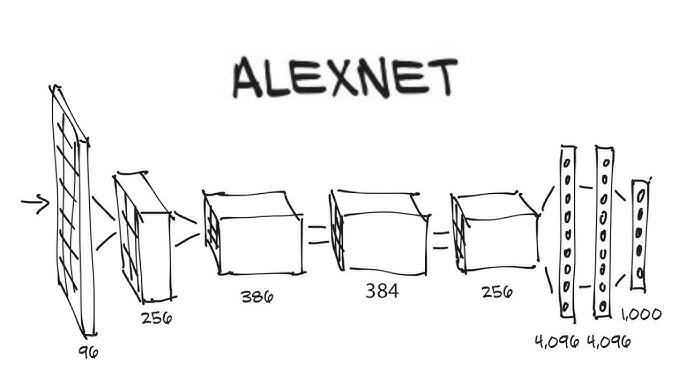
In this computer vision project, I trained a classifier to distinguish between 17 celebrity classes. I used a pretrained AlexNet model in PyTorch, adapting it to the dataset through transfer learning.
The project brought together model training and a question that matters just as much: what can I learn from the images the model gets wrong?
Adapt the model to the dataset
Transfer learning provided an existing image representation to build on. I used rotation, flips, and color jitter to vary training images, along with dropout regularization to address overfitting.
The task still required evaluation on the target classes. K-fold cross-validation and confusion-matrix analysis helped examine performance rather than treating a successful training run as the end of the project.
Read the errors as part of the result
The classifier achieved 57.35% accuracy across the 17 classes. That number describes the overall outcome, but the confusion matrix and misclassified examples provide more detail about which distinctions were difficult.
This was a closed-set classification project: choosing among known classes in a particular dataset. Its result is useful in that context. It does not describe performance on new identities or establish a general identity-verification system.
The project expanded my experience beyond tabular models into image classification. The lasting lesson was to connect the reported metric to the task and inspect the errors before deciding what the model can do.
Explore Celebrity Face Recognition
- Python
- PyTorch
- AlexNet
- Transfer Learning
- Computer Vision