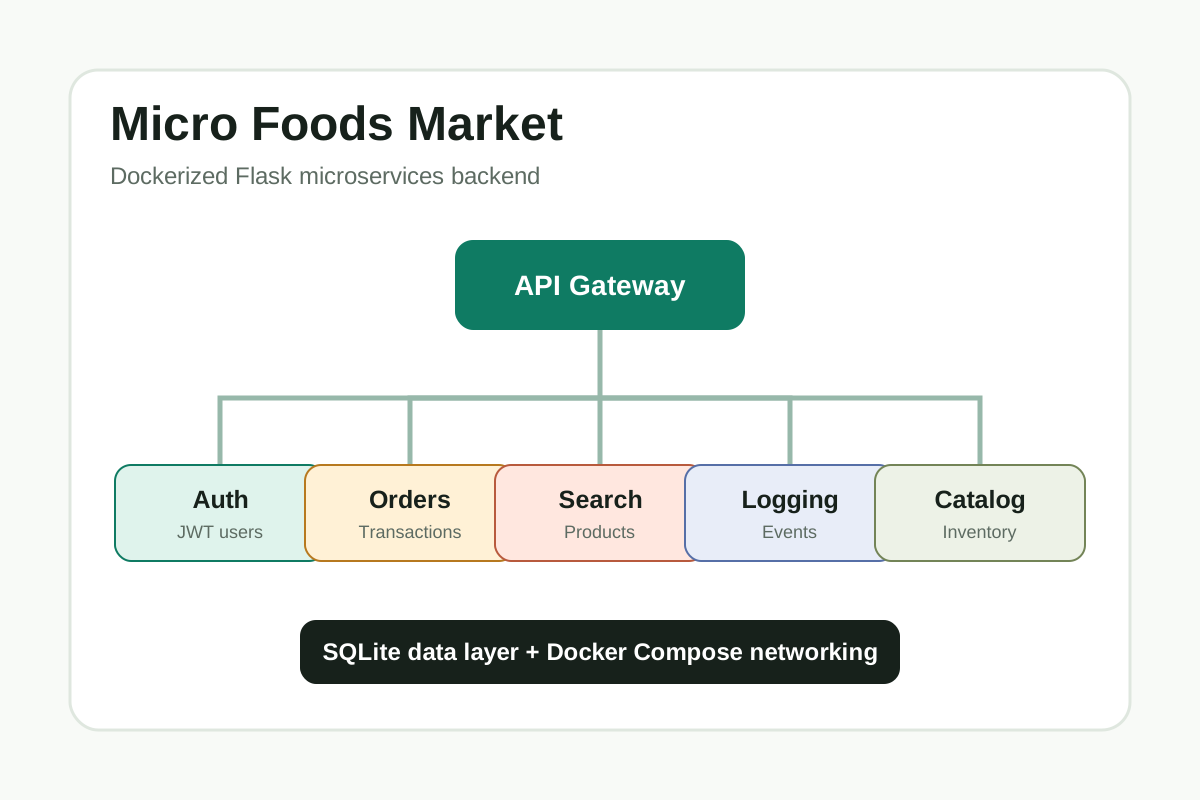
Micro Foods Market is a backend project organized around a food marketplace. It gave me a concrete way to work with the parts behind an application: accounts, products, search, orders, and the records of what happened.
I built five Flask microservices with REST APIs, SQLite persistence, and JWT authentication, then connected them through Docker Compose.
Work through the boundaries of an application
The marketplace divides into recognizable responsibilities. Authentication handles identity, product management maintains the catalog, search helps locate products, and orders represent transactions. Logging is a separate responsibility within the system.
Separating those services made their interfaces part of the project. Each service needed a defined API, and a workflow spanning services needed those APIs to fit together. JWT authentication added identity to the requests moving through that backend.
Run the system together
Docker Compose provided the local orchestration and networking. That brought the services into one development setup and made the connections between them explicit.
The result is a containerized backend foundation, rather than a launched marketplace. Its value for me was working through service separation, authentication, and integration in the context of an application. It gave me backend experience that I could carry into later platform projects.
Explore Micro Foods Market
- Python
- Flask
- SQLite
- Docker
- REST APIs
- JWT